Blog archive

viernes, 26 de marzo de 2021

Translator's reflection

 Hey everyone! What's up? I'm Ana Isabel and this week I have been assigned the translator's role.

To make it a little easier and more enjoyable, I put you a video that contains the 5 key terms for this task and some more things that, as the translator, I have taken into account.

I hope you like it. Thanks for everything! Enjoy the weekend!


Analyst's Reflection

Hey there! I’m Elena and this week I’ve been the analyst of the group. I’m in charge of conducting the final reflection of Task 4, so here it is!

This activity consisted of 2 parts. We really liked doing this activity in a group as we found it to be quite an entertaining and fun activity. The first part consisted of choosing an activity and doing it as if we were the students. In the second part, we had to create a Pecha Kucha presentation, which consisted of making 20 slides and each lasting 20 seconds.

On the other hand, the worst part was the choice of the activity itself. Since we did not know which one was going to meet all our requirements 100%. Finally, we opted for "The Music Maker", making use of the JamStudio application. 馃幍馃幍

Without a doubt, the best part of the week was the moment of creating the song. It was very funny as well as curious.

On the contrary, I think the worst was the presentation part itself. Since we were all expecting that everything was fine and that there would be no problem with time. 馃暃

On the learning side, we have learned more than I thought we were going to learn. Because in addition to learning what the "Pecha Kucha" presentation technique was, we have learned, in a way, some music. Since in order to create the song we had to know more or less how to use the chords.

This week, I have to say that I am very proud of how we have worked. That is why I believe that what we must preserve is the cooperation and support between us. In addition to the fact that, with respect to previous weeks, we have started this activity the same day it was sent, which is why we have been more relaxed when carrying out the activity. 馃榾

With this activity we have learned a lot of information, which we can easily put into practice in our future as teachers. From the technological part, to a minimum of the musical part. This is directly related to the degree, since it is quite recurrent when it comes to doing it with children. It involves a lot of collaboration between them and a minimal knowledge of technology.

I hope you are enjoying our posts and learning with us!! 馃槉馃槉

See u next week!馃憢

Facilitator's reflection

Hey everyone! This is Daniela and this week I'm playing the role of the facilitator馃憦 so I'm going to explain you how I have made easier the group running.


First of all, I distribute the roles by two raffles. The first one was made with the three names of those who had not yet been stars: Ana, Paula and me. Ana and Paula were the stars, so I made another raffle with the rest of us in order to distribute the other roles. 

I suggested to read all the activities on our own and then talk together to decide which one would be the best one to choose. Finally, we chose the activity called "The Music Maker". We carried out this activity in groups of 3, so we composed two group pieces.

Then, we answered the questions all together as we were on a zoom meeting and we like to help each other. We did it very quickly and we started to prepare the Pecha Kucha presentation. We gathered all the answers and pictures of our experience doing the activity in a PowerPoint presentation that we did together as well. 

When we finished, I reviewed the grammar and spelling that we had used in this task. 
The day before the presentation, we were motivating and encouraging the stars of the week. It was a challenge and they did an incredible Pecha Kucha presentation, so we were really proud of them. 

Hope you like our songs!馃檵

Stars' refelection.

Hey there! It's Ana Mar铆a and Paula, the stars of this task. As this week we needed two stars for the task and we are only six Happy Flowers, we are sorry to announce that this week there won't be a curator post 馃様. But don't worry, because this week has been really interesting and you will enjoy all of our posts!! 馃槣馃槣

Task 4 consisted of choosing an activity for Primary Education students from a book given by our teacher Linda and then carrying it out as if we were a group of students. After considering different activities, we picked "The Music Maker". Its objective was to create a song that recalled a certain subject with an application called JamStudio. We went for the subject "Feelings", and as the activity was meant for groups of three, we divided ourselves into two subgroups. Here you can see us working on our songs 馃槃馃幎: 

This group formed by Ana Mar铆a, Ana Isabel and Daniela was working on a scary song 馃懟 

This other group formed by Paula, Alicia and Elena was working on a happy song 馃榿


And these are the final results!:


However, the task didn't end here. After doing the activity, we had to answer some questions about it:

  • What subject is this task about?

This task is about the subject of Music, as it is about composing a song.

  • What level would be appropriate for this?

The most appropriate level for this task is the fourth grade, as it is prepared for nine years old children or even older.

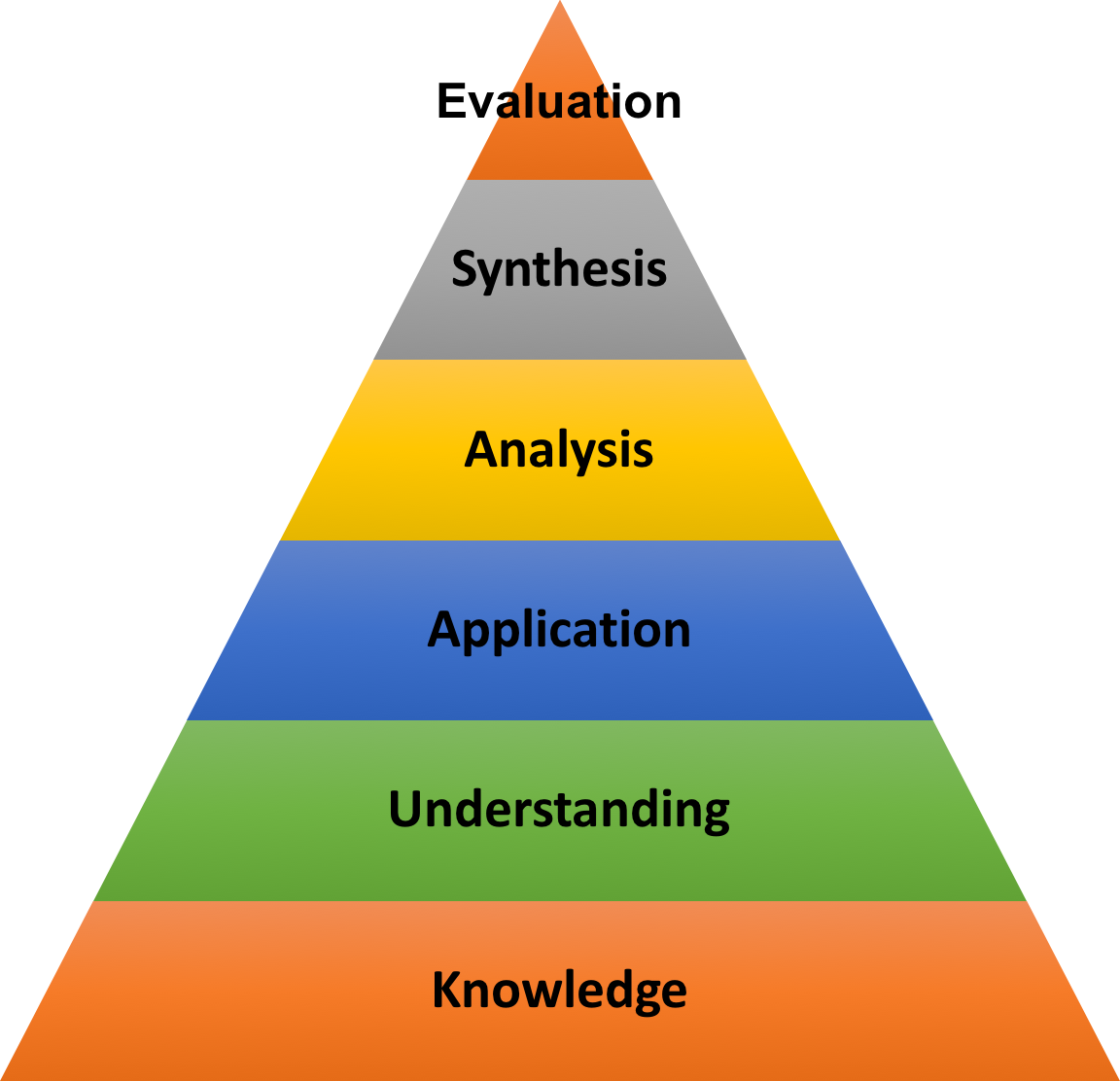
  • What is(are) the objective(s) of this task follow the Bloom Taxonomy?


https://upload.wikimedia.org/wikipedia/commons/d/d9/Blooms-pyramid.png

Knowledge: The children will be able to name the musical notes they have previously learned.

Comprehension: The teacher will play examples of compositions with a subject matter or theme, allowing students to guess what the songs are about. The teacher asks them why they think as they do.

Application: They have to compose a song with an app called “JamStudio”, in which they have to put into practice the chords they have learned. They are able to manage the app. Moreover, this song has to be related to the subject of “feelings”. 

Analysis: The students are able to identify each musical note and arrange them in chords that sound well. 

Synthesis: Given a list of musical notes and a stave, the students are able to create a composition.

Evaluation: The songs need to have a strong beginning and ending, trying to avoid being so sudden.

  • What is the technology used on this task, and what is the technique/format this technology is focused on? (storytelling, robotics, images, diagraming, conceptual mapping… etc.)

The technology used on this task is an app called Jam Studio. It is focused on the creation of instrumental music. 

  • What is the added value of using digital tools in this case?

This app enables everyone (kids and adults) to create songs in a very intuitive way, as it is not necessary to have any musical knowledge to use it. In order to make a song, kids have to try different combinations of chords and listen to the different styles available that each instrument has so it ends up sounding nice. In this task, they work on their creativity, on their musical ear and on their technological skills.

  • What ethical problems could you (or your students or the parents) find doing this activity in the classroom?

The main ethical problem with this activity is that it is not suitable for completely deaf students. If this activity was adapted by using another application in which it was possible to choose the beat, with the help of their classmates these students would be able to participate. Sadly, in JamStudio, the beat is chosen by default. 

  • What changes do you need to make to allow your students to do it from home?

This task is quite easy to adapt to a telematic format, as the main element to perform it is Jam Studio. It would be necessary to explain how the app works very clear to make sure everyone understands it. In terms of grouping, we see two options: make it individual or stick to the “group of three” format. In that last case, only one student would be able to use the app, but if they are using zoom, the student who is working on Jam Studio could share his or her screen so the others participate as well. However, if the students don’t have access to the Internet or to a computer from home, the task would have to change. Alternatively, the teacher could ask them to create a song by making sounds with everyday objects and recording it. 


Finally, we gathered all this information in a PowerPoint presentation. On Tuesday's online lesson we, the stars, displayed it to our classmates and our teacher by following the Pecha Kucha format (20 slides in 20 seconds each). If you want to take a look, here it is:


We would like to emphasize that this activity has been very pleasant and rewarding to carry out. We consider that this will help us in our future careers to take a different perspective when preparing assignments for the students. Having experienced the problems that emerge in the course of completing the activity has made us notice some aspects, like paying attention to the complexity of the activity and the time it requires, that will definitely affect the approach we will take when the time of exercising our job as teachers arrives.

This is it for this week!! We hope you are enjoying our learning journey and our posts 馃槃. 
See you after the break! 馃憢


Journalist's reflection

 Hi everyone!! I'm Alicia and this week I will explain how our week has been through the journalist's role. So... let's start

The activity of this week consisted in exploring tasks with digitals for primary school children. In order to do that, we were provided with a book full of activities we could develop. We spent a lot of time of choosing, we're a bit indecisive... but we ended up with 'The Music Maker'.
To create the songs we divided ourselves into two groups of 3 (since we are 6), and worked in two different zoom rooms. Here you can see us creating the songs馃幍馃幎


Each of the songs reflects a subject... The first one is 馃槃the song of happiness馃槃, the other one is 馃槰the song of fear馃槰. 
Once we created the songs it was time to answer the questions related to the activity and to make the powerpoint our stars, Ana Mar铆a and Paula, will be encharged of presenting to the rest of the group in the online session. 
We had a great time developing this tasks, now we are musicians too... kind of.

Now, I'd like to recommend you the App we discovered this week thanks to Linda:
It's not only fun but also really easy to work with. You should definitely try it and let us know :)

Lastly, I would suggest you to take a look in our colleagues blogs. Specially: https://athenians06.wixsite.com/website/ It's a very organized blog and very pleasant to look at! 馃憣

Enjoy spring break馃尭馃挆馃尯馃挍
See ya!

s谩bado, 20 de marzo de 2021

Journalist's reflection

 Hi everybody again!! 馃グ I'm Ana Isabel and this week I'm playing the role of the journalist, so, let's see what we have done during this week and how task 3 has been developed.

This task started on Thursday 11th of March, when our teacher Linda explained us what do we had to do on Task 3, and guess... It was a comic!!

Linda showed us some differents types of comic and, then, we had to decide which one we wanted to do. At the time of choosing, we thought that the "cave art" comic was one of the best options to elaborate our own comic. Then, I have to say that it was not like we have imagined it. 

First, we created the story and we tried to not to do it very long, because in the instructions of the task that Linda provided us it was specified that the comic has to be of minimum 6 and maximum 9 comic strips. Once we had the story, we started creating a kind of sketch on Canva. Canva is a free graphic design platform that allows you to easily create designed templates; it is really good and we have worked with it yet well. The sketch we did was not very clear, so we thought about asking to our teacher to ensure that it was correct. Before asking Linda, the group was a little bit "divided". Some of the group thought that what we had done with Canva did not really resemble the "cave art" form, and the others thought it did and that it was fine and could be understood as cave art (a cave art of the 21st century). Since we weren't sure and couldn't agree, we finally decided to ask Linda. She said that the main problem of our creation was that there were speech bubbles, and in cave art design there are not any speech bubbles!!

But... wait a minute... I think it will be better if I give you a more visual summary of the week; I'll do it with a video!

Here you have it.馃

Enjoy it! 馃槝


viernes, 19 de marzo de 2021

Analyst's reflection.

Hi! I’m Paula and this week I’ve been the analyst of the group. I’m in charge of conducting the final reflection of Task 3, so here it is!

This assignment has certainly been a challenge for our group. We chose to do our comic with cave art thinking that coming up with a good result wouldn’t be very difficult. But let me tell you, doing a cave art comic is really complicated. 馃槗

I think getting to understand how we were supposed to elaborate our comic with cave art was the worst part of the week. At first, we tried to make the comic with Storyboardthat, but we weren’t confident or happy with the result. Then we asked Linda for feedback on what we had at that moment, but since we had spent so much time doing the comic, it was already Saturday and the answer to our doubts had to wait until Monday. The weekend in general was bad for the group because we were disappointed with the comic we had designed and, at the same time, we were a bit afraid that we were running out of time. 馃槙馃槙

Regarding the worst part of the task in particular, I consider it was having to remake the poster using a different format and eliminating the speech bubbles we had introduced in the first sketch, as they weren’t characteristic of cave art. Even though we had our storyline, we had to produce it without relying on any text. In addition to that, we didn’t have a clue how to represent cave art so the result would be appropriate.

On the contrary, the best part of the week and of the activity was coming up with the main narrative thread of the story we wanted to tell.馃挕 What we were elaborating recalled our groupmate Ana Isabel somehow of the famous myth of the cave by Plato. Once we found our main inspiration to develop our own story, it was very easy to work and we were really motivated to portray our thoughts on the comic. 

As a group, we have created a very nice atmosphere where we can share our opinions freely and it is very pleasant to work in. Although there were some moments of stress, we always help each other and team up to hand over the assignment successfully. We should improve our time management, but apart from that, I feel that we make a good team. 馃槃

With this task, we have learned a great deal of information about how technologies can enhance children’s learning process and our labor as teachers. This is directly related to our degree and our future career since we will be in charge of teaching in a way that we meet the needs of our students, which include giving them the appropriate skills to get on well in a society that advances faster every day. 

I hope you are enjoying our posts and learning with us!! 馃槉馃槉

See u next week!馃憢


Facilitator's reflection

Hey there! This is Elena and in today's task I have been assigned with the facilitator role.

This week I had to try to motivate my colleagues in times of stress so as not to decline in the task. Besides that I had to configure and distribute the different tasks that we had to do among ourselves.

As my colleagues said in previous tasks, we distribute the roles by raffle, since it seems the most fair. In addition to this, the tasks are usually carried out all together regardless of the role that each one has.Due to some inconveniences with this task, I finally decided to distribute a little more the steps that we had to perform in order to finish the comic.

As facilitator of the week, on Thursday, I had to decide what kind of comic to choose. At that moment we were all very clear about it, we wanted to do "cave art", it seemed the most beautiful to us ... until we started doing it.

On Saturday we started the task all together, and little by little we divided the activities. While some were creating the story, others were looking for information about the potentialities, and others started with the comic.
Finally, we finished the comic on Monday, due to setbacks, and we were helping and supporting the star of the week until the last moment. And when it was finally finished, we congratulated ourselves on the fantastic job we managed to do.
I am very proud of all of them.

Star's reflection

Hello there! It's Alicia ❤ This week I have been the star, which means I was the one in charge of presenting the task to our classmates. 

The task of this week consisted on creating a comic and each group had a different art format assigned. 
We choosed Cave Art and even though it seems easy to do... let me tell you it was more difficult than what you expect. 
The story of our comic was based on "The myth of the cave" and it's the following:                               
A group of children has been living in a cave for their whole lifes and they only knew what they had been watching inside. They didn’t know there was an entire world behind those walls. However, the main character, who was a very curious girl, found a mobile phone, which was a totally new object for her, and she started to investigate, finding a hole in the cave. She went outside and discovered a lot of new things, so she decided to tell her friends what had occurred. At first, they weren’t so open-minded, and it was difficult for them to assume so much information, but the girl reached to convince them and they finally got out of the cave.

To summarize, I would like to say it was a hard work but we had a great time discovering new apps and creating the comic. I hope you like it as much as we do :)
See ya!!


Curator's reflection

 Hello guys! I'm Ana and my role this week is the curator.

I am going to show you all the documents, webs, apps and material that we have used to perform this third task, which was about a cave art comic, named "Outside the cavern".

To make the comic, we used the following resources: Storyboard That, some school material, Simple Scanner, Pics Art, the Lemke text and Flickr.

To carry out the exposition itself, we used Zoom and Google Drive.

In the mind map below, you can see what are the utilities of all of these resources, as well as finding out the links to use them.

I hope this post has been helpful for you... and see u next week. Bye!馃槈


jueves, 18 de marzo de 2021

Translator's reflection

Hi everyone! Welcome one week more to our blog! I am Daniela and this week I'm the translator of this task. So here you have the 5 main ideas we can get from this week:

Comic: a visual medium that tells a story by vignettes or boxes using pictorial and other images. The vignettes may contain speech bubbles. 

Participatory learning: It is important that students participate and collaborate in the learning process in order to achieve a dynamic learning  process. Technologies have allowed us to interact with each other and also engages students in learning. There are a lot of apps that help students to learn through participation.

Cave art comic: a comic format in which the story is told through Paleolithic humans represented by drawings and paintings on the walls of caves

Visualization: a strength of comics in education that combines visuals with text. This innovation increases learning and it can also be a tool for critical and creative thinking. Using visuals will motivate students in their learning process.

Innovation: the combination of human ingenuity and digital tools leds to this creative idea that goes viral and produces a change. 

We have found some information from this documents and websites: 

Lemke, C. (2010) Innovation through technology, in Bellanca, J. A. & Brandt, R. (eds.) 21st century skills: Rethinking how students learn. Bloomington, Solution Tree Press, 243-274.

http://www.graphicclassroom.org/ 

http://www.humblecomics.com/comicsedu/index.html

The weaknesses of this week and task 3 have been maybe reading and understanding the text, as it was quite long, and choosing the 4 main potentialities of the ICT in the classroom. We also found it difficult to understand what cave art was, but the hardest part was to find a way to represent those potentialities in a cave art comic, with no words or facial expressions.

SEE YOUU NEXT WEEK !!馃槏

s谩bado, 13 de marzo de 2021

Facilitator's relfection

 Hi guys! Welcome another week to our blog! I am Ana and this week I have the role of the facilitator.馃槆

In theory, I had to distribute the different roles among the members of our group, but as Paula told you last week, we decided to raffle the roles because we think it is fairer.

Last week it was a bit confusing. Our classmates and us had not understood so well what the task was about, and Linda decided to give us another week to prepare it better. Nevertheless, we had finished the task just the night before this announcement. As we all were a bit stressed, I tried to encourage my teammates in the best way possible. Finally, Ana Isabel, our star this week, performed so well during the presentation and we did it! We reached to conclude our task.

I have to say I am very proud and grateful for the peers I have. They are all lovely girls, you can talk to them or ask for help without any problem. It doesn't matter if we have had a difficult week; because you know they are going to be there by your side. With them, everything is easier. Thank u for all my dear Happy Flowers!!! 馃挄 And see you next week, guys馃槉


viernes, 12 de marzo de 2021

Journalist's reflection

Hi everyone!! I'm Daniela and this week I'm playing the role of journalist, so I am going to tell you how we managed to develop the activity of ACAD and TPACK. 


As each week, we began by assigning the roles to each member. To do that, we used this website to make a raffle: https://echaloasuerte.com/
We agreed to watch the videos and read the documents on our own and then we worked together to answer the questions using a google document. In just a few hours, the questions were answered. The next step was to create the information map, for which we had a zoom meeting.


We were quite stressed since we were on Monday and the presentation was on Tuesday. This week has been chaotic for almost everyone because we didn't realize that we had to start the task 2 until the weekend. 馃槄And what is more, we had an exam on Thursday!!馃槵

We decided to use Prezi and a type of information map called bubble graphic organizer. This app allowed us to work on the information map at the same time, so we did it together while we were on video call. That same Monday afternoon we finished the task!✌


On Tuesday's lesson, we were ready to present the task, but Linda decided to postpone the assignment to the following Tuesday. The first thing we thought was that we had wasted our time when we could have been studying for the exam, but the truth is that we had a week off!

The day of the presentation arrived and the star of the group presented the poster and explained our work to the class. She was quite nervous but she was incredible!!

This week we have discovered several sites of interests thanks to our teacher Linda, such as:


3) APA Generator:

Finally I would like to recommend you the blog of our colleagues https://blackeyezpeers.blogspot.com/ which we found very interesting and organized with tags so you can find the information easily.
Another blog of interest is http://blogs.unlp.edu.ar/didacticaytic/tag/tpack/ , where you can find more information about TPACK.

See you next week!馃槑

Analyst's reflection

Hey y'all! It's Alicia and this week I'm the analyst of the group馃槉

I'm in charge of the analysis and final reflection of the task 2. Let's get into it:

In order to develop this task we had some problems... but fortunately we managed to complete it successfully馃挭馃挭

Starting with the worst part of the week... At first, we were confused with the deadline and thought the task was due to a week earlier than it was!! You can imagine how stressed we were at that time, but the best moment of the week was knowing we had more time left to finish it in a more relaxed way. 

Another difficulty we found with this task was creating the information map since we didn't have a clear idea on how to organize the information. On the other hand, the best part was that we were really happy with how the task went out. I would like to thank our Star, Ana Isabel, who did an amazing presentation to the rest of the group.

Something we should conserve as a group is the respectful environment we have created in which everyone feels safe to share their ideas. Each of us opinion matters in the same way and I think that's an important characteristic of an effective work group. Maybe we could improve our organization, specially in the online class where we have an schueled period of time to develop the activities.

We have learned a lot of things about TPACK and ACAD framework, which is content directly related with this degree.

I hope you have liked this post! See ya next week in another role馃槝

Star's reflection

Hi everyone!馃檵馃徎‍♀️馃 I'm Ana Isabel and this week I'm playing the role of the "star". I presented last Tuesday our final product of this task and now I'm going to explain briefly what did we have to do.

This week we have worked and researched on the TPACK and ACAD, which are two frameworks that are looking for improving learning and teaching. Besides, they are interested in the role of technology nowadays and in how it would be beneficial for education.

The task consisted in read, first of all, some documents and watch videos to extract information and know what were exactly TPACK and ACAD about. Once this was done, with the information extracted we had to answer some questions about these two frameworks and, finally, make a concept or mind map about these two elements, in order to make a poster. 

The last step was presenting our poster to our teacher and classmates and, like this, explain our work, see other perspectives (those of our classmates) on the contents studied and learn more about the TPACK and ACAD.

This was the result of the poster:


If you want to take a better look to it, click on the link here!  https://prezi.com/view/9rM1USLHs9TZNjp7698n/

The questions we had to answer were the following:

1. What is TPACK and What is ACAD exactly? (e.g. is it a technology tool, a theory, a model, an animal, a poem, an author? All these? About what?) 

2. Which are the essential TPACK elements and how do they interact with each other? 

3. Which are the essential ACAD elements and how do they interact with each other? 

4. How would TPACK be useful for you? 

5. How is TPACK related to ACAD? 

We tried to give the better answers to them as possible, and we did it creating a circle map or bubble graphic organizer. In bubble graphic organizers, we normally can see the middle bubble used to write the topic to brainstorm and the outside bubbles used to write ideas that relate to the given topic. We decided to use this kind of graphic organizer to help students brainstorm ideas and because it is something different, with no lines and usual things of schemas or mind maps. In this way, you can see that the green circle is the context, and it involves everything because it is really important and determining. Then, you can see the two central circles showing the elements of each of the frameworks and, to finish, the two lateral and smaller bubbles, which try to answer the two last questions. Our goal was not to put much text and try to make it as simple and swift as posible in order to make the viewers understand it quickly and at a glance. 

I hope you like it as much as we like doing and organizing it. If you have any question or doubt, please, comment and we will answer you gladly. 

Thank u all!! Take care! See u next week 馃馃徏馃グ馃槝

jueves, 11 de marzo de 2021

Curator's reflection

 Hi, everyone!!! I'm Paula and I've been performing the curator role during the development of task 2. 

This week the theme of the task was TPACK and ACAD frameworks. We have used some sites and tools that have allowed us to make the poster and collect the information to do it. 

First of all, we visited the sites Linda had attached in the document of the task to answer the five questions.

After that, we considered different apps and websites to make our poster, and finally, we opted for Prezi. This website is frequently used to make presentations but as some of us had already used it before, we thought that it would best capture our original idea. 

Finally, since the presentation's day was on Tuesday and that day's sessions are on Zoom, our star Ana Isabel presented the poster to our classmates employing the speed learning dynamic.

In addition, the mind map below has been made with Genially and Creately. 

To conclude, this role has taught me many things I will certainly use in the future. For example, I've discovered a new site to make mind maps or schemes in general, which is Creately. Also, I've had to spend some time and patience in order to learn to use it 馃槄. On top of that, to make this post I've learned some functions of Blogger that I didn't know before, as introducing links to a certain word or introducing interactive images. I'm sure this will come in handy for other tasks or for my future career as a teacher!

Hope you are enjoying our posts and following us during our learning process 馃槃馃槃. 

See you next week!!

Translator's Reflection

 Hey there! This is Elena and in today’s

task I have been assigned with the translator role.

We are going to start this section by presenting the 5 key terms that we have used to develop this activity. Finally we will reflect on what has been the most difficult of the task, as well as the tool we have used to carry it out. In addition to reflecting on how the implementation of these configurations in education could be improved.


Framework: These are the basis or structure of all information and work. Thanks to them, we can reduce extensive information into a scheme in which the basic concepts can be clarified. In all of them you have to comply with rules which are standardized. They form the basis of a software. These undoubtedly make the job easier.


TPACK: This term corresponds to the abbreviations Technological, Pedagogical and Content Knowledge, although it is also known as TPCK. This model is a theoretical framework whose purpose is that the teacher can correctly implement ICTs in education, and more specifically, in the classroom.

This is based on 3 key domains of knowledge to

carry out its purpose. These insights are:

  • Technological Knowledge (TK): knowledge and skills that teachers must have to address ICT in their teaching.
  • Pedagogical Knowledge (PK): refers to the procedure of these processes or practices.
  • Content Knowledge (CK): refers to what is taught or learned.

In turn, these have 4 new knowledge which are:

  • Pedagogical Content Knowledge (PCK): refers to a specific area of ​​knowledge, including the understanding of the representations about the most specific, in addition to the knowledge of the pedagogy and the didactics of each knowledge.
  • Pedagogical Technological Knowledge (TPK): it is the knowledge of the general pedagogical activities that the teacher carries out, using ICT.
  • Technological Content Knowledge (TCK): refers to how to make representations with technology.
  • TPACK: forms the intersection of the center.

Finally, the last factor that surrounds the entire TPACK, is the context.


https://blogger.googleusercontent.com/img/b/R29vZ2xl/AVvXsEhiO-7rsSpLctoZQmS-waB178Te5VL7Qe57123o_DGp7g1HFUXYBgUieGClZg_kDTUul97hJskLspVKFtIFLof9UoaKwe2G04JpNTnaMBsvWwy8_ayCyVnYHnS9r-JqBz-DGORTQqQVEwuH/


ACAD: is the acronym for Activity-Centred Analysis and

Design Framework.

This model is a theoretical framework that was carried out to support activities in difficult situations. In addition to that it was created in order to create connections between the proposed activity and its design tasks. ACAD aims to achieve productive production and with this model it is argued that all learning must be situated.

This is developed by organizing 3 design components:

  • Set Design: it is the physical situation.
  • Epistemic Design: they are the tasks themselves.
  • Social Design: it is the social situation.

Concept Map: they are maps in which information is represented so that it is visually easier to acquire it. There are different types of concept maps; some of them are organization charts, hierarchical, spider maps ...


https://blogger.googleusercontent.com/img/b/R29vZ2xl/AVvXsEjbT_2lBJ8c99H0nTOgczEGMK_p43jkYoUsbJdghLd6BolR2HgkbQoiFdO7AsQ86c9t1RFkpXb046vprj8dES6ikQ9gmha57ivw98WJSj__GUgxProKlYMVWQ8y5FqXQT8UE-aO8_irc_H-/


Networked Learning: They are online social networks in which participants, regardless of the country, share information so that little by little knowledge is created and thus be able to enrich their knowledge in a simple and practical way. It is an open organization for learning.


Finally, taking into account the difficulty of the task, we can say that it has been above all to relate the two concepts. Since they were totally unknown (TPACK-ACAD) for us and we did not have enough fluency with them to establish a relationship. The task itself, we have been able to carry out thanks to the online platform "Prezi" to create the concept map. In order to carry out these concepts in the classroom, we believe that a good knowledge of possible future events is necessary, control the topics to be addressed and try to motivate the students above all.